
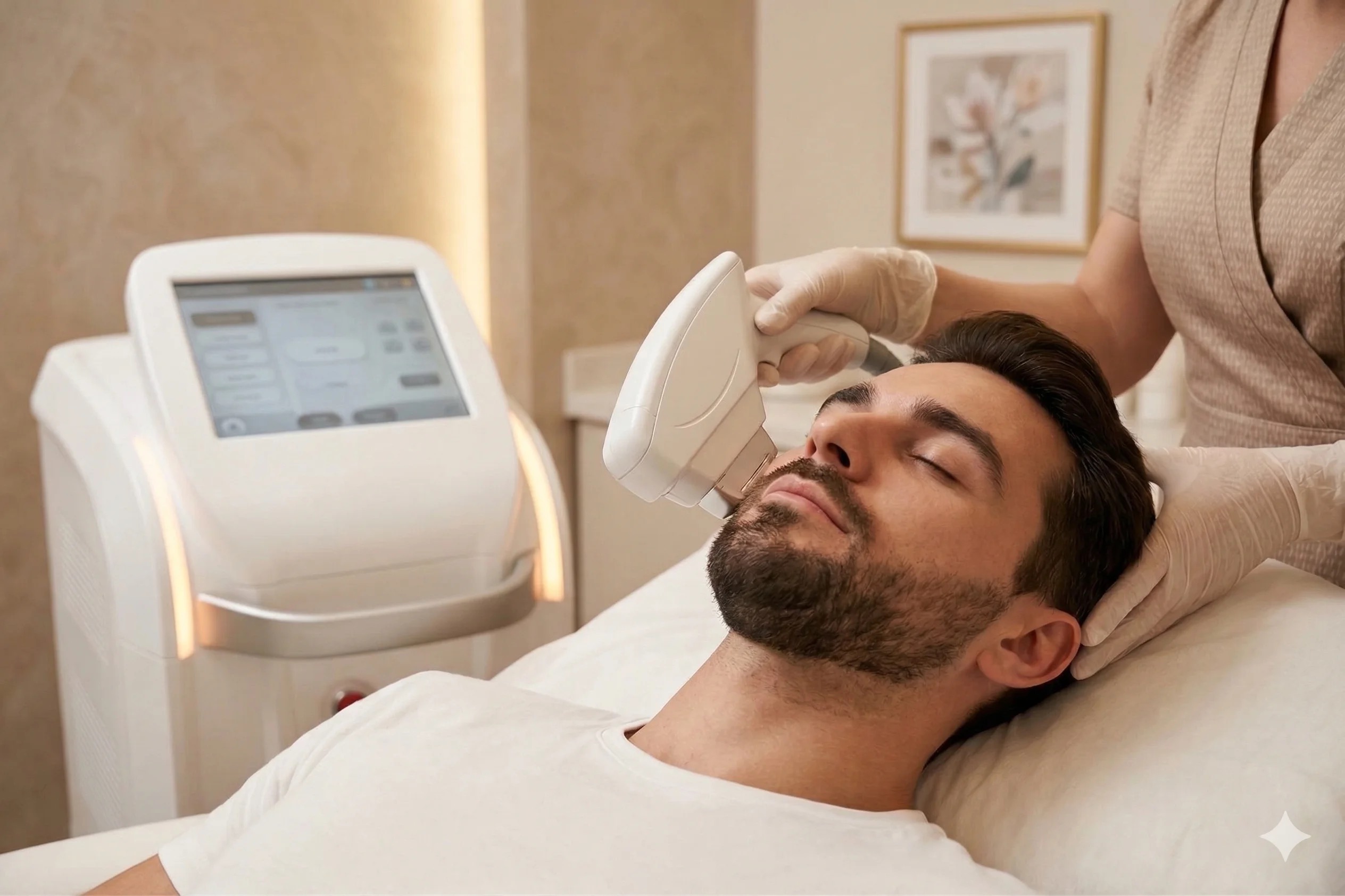
Laser hair removal is not just for women. At our Streeterville clinic, a growing share of our patients are men looking to reduce unwanted hair on the back, chest, shoulders, and neck. Whether the goal is a cleaner look, less irritation from shaving, or simply not wanting to deal with body hair maintenance anymore, the process works the same way and the results are just as permanent.
Here is what men specifically need to know before booking.
The Most Common Areas Men Treat
Men's treatment areas tend to be larger and denser than women's, which affects session length but not effectiveness. The areas we treat most often for male patients:
- Back and shoulders — the most popular area for men by far. Dense growth, difficult to reach on your own, and nearly impossible to maintain with razors or waxing.
- Chest and abdomen — for a cleaner look without the stubble that comes back within 48 hours of shaving.
- Neck and hairline — especially common for men who get frequent haircuts and want a clean neckline between visits.
- Arms and legs — popular with athletes and anyone who prefers a smoother look.
- Face (cheeks, jawline) — for men dealing with razor bumps, ingrown hairs, or excessive facial hair they want thinned rather than fully removed.
- Manzilian — a professional grooming service that removes all hair from the front and back of the pubic area.
Why It Works Differently on Men's Hair
Men's body hair tends to be coarser and darker than women's, which is actually an advantage for laser treatment. The laser targets the pigment in the hair follicle, so thicker, darker hair absorbs more energy and responds faster.
The Cynosure Elite IQ we use combines two wavelengths: the 755nm Alexandrite (ideal for lighter skin tones) and the 1064nm Nd:YAG (safe and effective for darker complexions). Before every session, we use the FDA-cleared Skintel Melanin Reader to measure your skin's melanin density and dial in the exact energy settings for your profile. No guesswork, no one-size-fits-all approach.
For men with darker skin tones, this matters. Older laser systems could not safely treat deeper complexions without risking burns or hyperpigmentation. The Elite IQ's dual-wavelength platform and melanin reader eliminate that limitation.
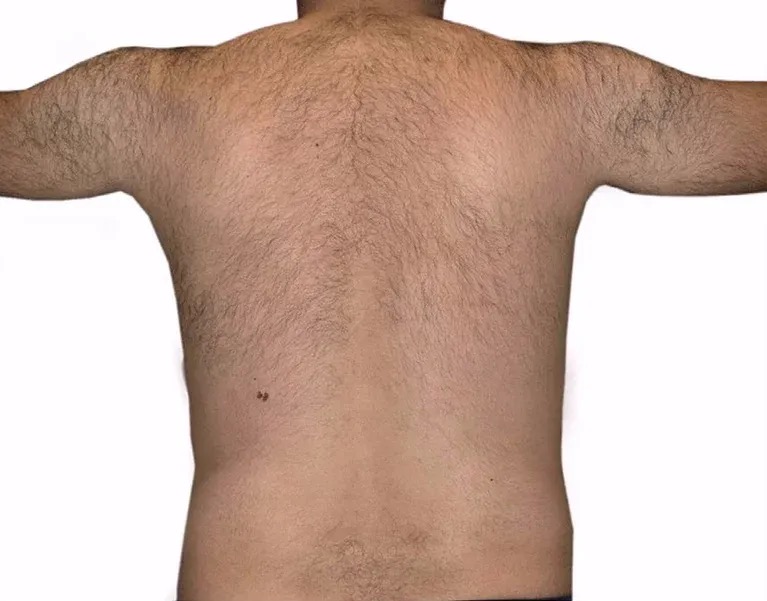 Before
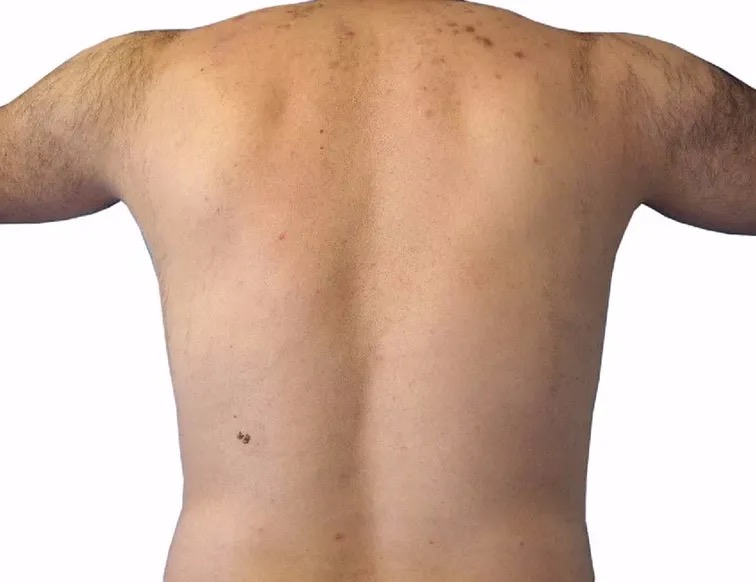 After
AfterHow Many Sessions Men Typically Need
Men generally need 6 to 10 sessions for optimal results, sometimes a session or two more than women for the same area. This is because testosterone drives continuous hair production, particularly on the back, chest, and face. The hair growth cycles in these areas can be more stubborn.
Sessions are spaced 6 to 10 weeks apart for body areas, allowing the hair to cycle through its growth phases. Each session reduces overall density, with results building progressively.
Here is what a typical timeline looks like for men:
| Area | Sessions | Spacing | Length |
|---|---|---|---|
| Full back / chest | 6–8 | 8–10 weeks | 30–45 min |
| Shoulders / ¼ arms | 6–8 | 6–8 weeks | 15–20 min |
| Neck / hairline | 6–8 | 4–6 weeks | 10–15 min |
| Full arms / legs | 8–10 | 6–8 weeks | 20–30 min |
Some men with particularly dense back hair or hormonal hair growth may benefit from 1 to 2 annual maintenance sessions after completing their series. In addition, those with a darker complexion may require additional sessions.
Does It Hurt?
This is the question most men ask first, and the honest answer is that it is far more comfortable than you would expect. The Elite IQ uses Zimmer cooling technology that delivers a continuous stream of cold air to the skin during treatment. Most patients describe the sensation as a quick snap, similar to a rubber band flick, that fades immediately.
If you have ever had a back wax, laser is significantly less painful, and unlike waxing, the discomfort decreases with each session as there is less hair to treat.
What to Do Before Your First Session
Preparation is simple:
- Shave the treatment area 24 hours before your appointment, preferably the day of the treatment. The laser targets the follicle beneath the surface, not the hair above it. Shaving gives the laser a clean target without surface hair absorbing the energy.
- Avoid sun exposure for 2 weeks before treatment. Tanned skin changes your melanin profile and can affect the laser's calibration. If you have been in the sun, let us know and we can adjust your appointment timing.
- Skip the waxing and plucking. Waxing removes the hair root, which is exactly what the laser needs to target. If you have been waxing, wait at least 4 weeks before your first laser session so the follicles have time to regrow.
- No lotions, creams, or oils on the skin before coming in. These products can cause complications during the treatment process.
- No specific downtime after. You can go back to work or whatever your day holds. Some mild redness in the treated area is normal and typically fades within a few hours. Right after the treatment, avoid hot tubs, saunas, and other heat-related activities that could irritate the skin.
Why More Men Are Making the Switch
The shift toward laser hair removal for men has been building for years. The reasons are practical: it is an investment that eliminates ongoing maintenance costs, it ends the cycle of razor burn and ingrown hairs, and it saves significant time over a lifetime of shaving or waxing.
For men dealing with back hair they cannot reach, excessive shoulder hair that shows through dress shirts, or chronic razor bumps on the neck, lasers are not a cosmetic luxury. It is a permanent solution to a daily inconvenience. If you want to dig deeper into the underlying concern, our excess hair page breaks down every solution we offer.
Book a Free Consultation
We start every treatment plan with a consultation where we assess your skin with the Skintel Melanin Reader, discuss which areas you want to treat, and map out a realistic session plan. There is no pressure and no commitment. Just a clear picture of what to expect.